For Valentine’s day, Marco and I visited Pim, a café on Wagenstraat. They have a “breakfast for 2” on their menu which I thought might be interesting to try out. While they have another café on Prins Hendrikstraat, the one on Wagenstraat has only been open since September.
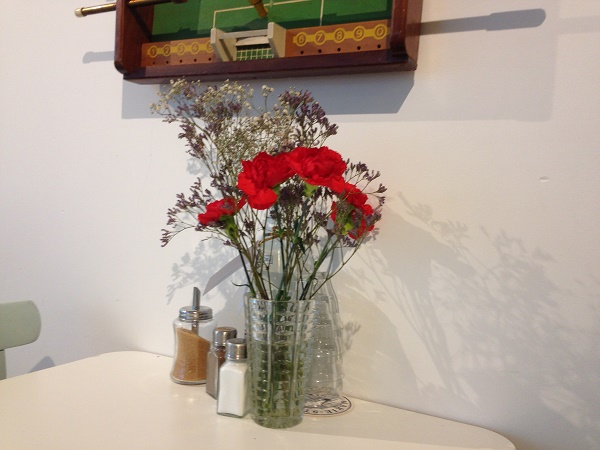
The ambiance was pretty nice, beginning with the flowers on the table:
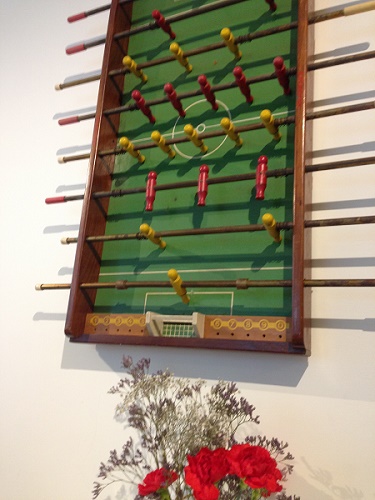
There was also a foosball table hanging on the wall:
And here is a look at the breakfast for two. Two large croissants, four pieces of brown bread, four pieces of white bread, orange juice, coffee, hummus and a few vegetables (zucchini, eggplant, paprika).
 The blue plate was awesome…
As you can see below, there was also cheese, ham and two cooked eggs. I am not a fan of eggs in general, so luckily Marco was willing to eat mine as well.
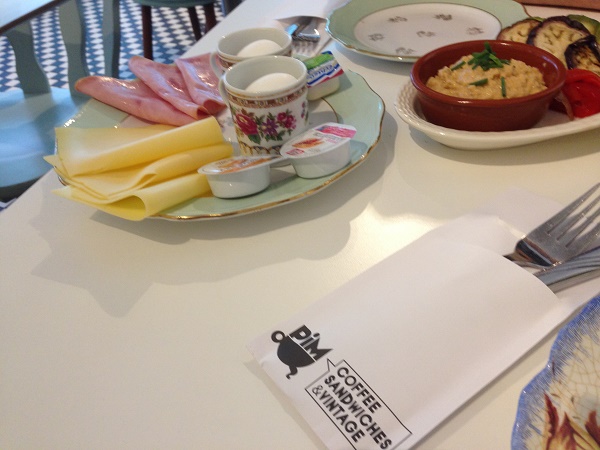
But definitely a nice breakfast – very filling!






 Life in the Hague